
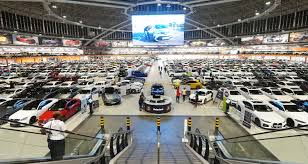
South Africa’s used car giants, including WeBuyCars, are facing intense competition and margin pressure due to the rapid influx and aggressive pricing of budget-friendly Chinese automotive brands. While WeBuyCars has managed to maintain its growth trajectory in revenue and sales volumes, the competitive landscape is forcing the company to adapt its pricing strategies, creating short-term pressure on its margins.
The surge in affordable Chinese vehicles has caused a structural shift within the South African automotive industry. New car sales in the first quarter of 2025 saw an unprecedented 20.6% year-over-year jump in passenger car sales, marking the highest growth in nearly ten years. This boom is being primarily driven by the aggressive entry of Chinese and Indian brands.
Chinese vehicle sales saw a massive 64.6% growth in Q1 2025 alone, pushing their market share from 9% to 12% in just four years. Brands such as Chery, GWM, OMODA, BAIC, JAC, Jetour, and JAECOO have quickly become familiar names to consumers. Data from AutoTrader indicates that Chinese vehicle sales overall jumped by a staggering 89% in the first half of 2025, demonstrating a fundamental shift in consumer attitude away from the scepticism of previous years. For instance, searches for BYD models experienced a 463% year-on-year increase.
The core issue for used car dealers is the compelling value proposition offered by these new entrants. Chinese manufacturers are disrupting the market by offering new vehicles at prices that compete directly with popular second-hand models, such as the VW Polo or Hyundai i20. Buyers who once sought a used German or Japanese sedan are now asking why they should not opt for a brand-new Chinese SUV, complete with a full warranty, for the same price.
In today’s climate, where economic pressures and inflation influence pricing, affordability is paramount for South African buyers. Chinese automakers have capitalised on this by offering an appealing mix of affordability, modern technology, SUV bodies, and enhanced aftersales support. One market analyst noted that these brands deliver exceptional value, giving buyers roughly 80% of what they expect for only 60% of the traditional cost. Even within the pre-owned space, Chery South Africa has launched “Cherished,” a certified pre-owned programme offering rigorously inspected vehicles backed by the remaining balance of the brand’s 10-year/1-million kilometre engine warranty.
The impact on major used vehicle platforms has become noticeable. WeBuyCars acknowledged that the market pressure caused by the structural shift influenced consumer behaviour. To maintain liquidity and ensure healthy inventory turnover, the group proactively adjusted the selling prices for vehicles to compete with Asian entrants, which led to short-term pressure on margins in the second half of the year.
Despite these headwinds, WeBuyCars’ overall financial results for the year ended September 2025 showed growth, with group revenue increasing 13.1% to R26.4 billion and sales volumes up 8.4% to 179,006 units. However, the trading update, which showed flat core headline earnings per share (EPS) growth due to the issuance of new shares, disappointed investors, leading to a 13.57% drop in the share price in October 2025.
WeBuyCars’ CEO, Faan van der Walt, remains cautiously optimistic about the long-term outlook. The company views the growing penetration of Asian brands as a long-term positive, anticipating that these affordable vehicles will eventually filter into the used-vehicle market, thereby expanding the group’s acquisition base and opportunity set. The group is simultaneously expanding its physical footprint, increasing its national capacity to 12,911 parking bays by September 2025 and planning further openings in Montana and Lansdowne.
However, the CEO also issued a warning to prospective buyers: not all Chinese manufacturers entering the market are likely to survive the intense competition. If a brand exits the country, owners could face challenges with parts availability and a vehicle that is difficult to maintain and sell, leading to poor resale values. He advised consumers to stick with established Chinese brands until newer entrants build a reliable long-term reputation.
The current situation is akin to a rising tide causing ripples in a stagnant pond: the influx of new, affordable Chinese vehicles is forcing South Africa’s established used car platforms to change their strategies and redefine what “value” means to the price-sensitive local consumer











Leave a Reply