
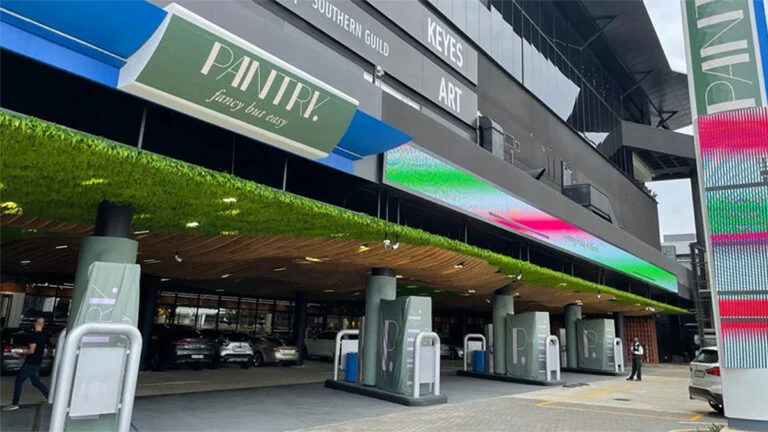
Fuel retailers across South Africa are radically transforming their business models from traditional petrol stations into integrated convenience retail destinations. Driven by a steady decline in fuel demand, tightening profit margins, and changing consumer habits, major operators are partnering with established grocery and fast-food brands to secure their financial future. This monumental shift is actively reshaping the country’s forecourts, ensuring they remain profitable lifestyle ecosystems even as motorists spend less time at the pumps.
The Decline of Traditional Fuel Sales
Motorists are currently under immense financial pressure due to rising global energy costs and local fuel price hikes. The economic reality has forced South Africans to significantly alter their driving habits. Recent telematics data from Discovery Insure revealed that fuel purchases plummeted by 23% in May 2026, while fuel transactions dropped by 17%.
Diesel drivers made the most drastic changes, cutting back their driving distance by 10.9%, compared to an 8.9% reduction among petrol vehicle drivers. Demographic data further highlights this shift, with female drivers travelling 9.5% less and men driving 8.6% less. Overall, national fuel consumption declined by 6.3% in 2024 alone.
For petrol station operators, selling fuel is no longer enough to sustain a business. Stations receive just over 8% of the total petrol price per litre, leaving extremely tight profit margins after operational costs, duties, and levies are paid. Consequently, fuel retailers are desperately searching for alternative revenue streams to survive.
The Rise of the Convenience Forecourt
As fuel volumes dip, convenience retail has emerged as the primary growth engine for the industry. Forecourt retail sales hit a massive R33 billion in 2023, growing by 8.5% year-on-year. The fuel forecourt footprint itself has expanded by 14.5% over the last five years.
Incredibly, 46% of shoppers visiting a petrol station today do not even purchase fuel. Instead, South Africans increasingly use forecourts as localized shopping and dining hubs. Statistics reveal that 74% of visitors buy groceries and 68% purchase takeaways during their forecourt visits.
The global retail trend is shifting away from being a “convenience store that sells food” toward becoming a “restaurant that offers convenience”. To capitalize on this, operators are rapidly expanding their food offerings, including barista-style coffee and hot meals, to drive footfall and profitability.
Proprietary Data: Retail Partnerships Dominating South Africa’s Forecourts
To thrive in this new landscape, petroleum companies have struck lucrative franchise and partnership deals with South Africa’s biggest grocery retailers. Below is a custom breakdown of the dominant retail alliances currently reshaping the market:
- FreshStop (Food Lovers Market): The dominant market leader with 330 stores. Partnered exclusively with Caltex/Astron Energy, this alliance has created over 7,000 jobs and heavily integrates the Seattle Coffee Company brand.
- Pick n Pay Express: Rapidly growing its footprint through an exclusive partnership with BP, operating 188 express locations nationwide.
- OK Express (Shoprite): Operating under a flexible franchise model, this brand has secured vital partnerships with Puma, TotalEnergies, and Sasol, allowing station owners to share directly in convenience store profits.
- SPAR Express: Partnered with Shell stations, leveraging SPAR’s highly successful franchise model to compete with Shell’s own in-house Select brand.
- Woolworths Foodstop: Operating predominantly within Engen garages under a unique franchisee-owned structure.
Real-World Case Studies: KAL Group and BP Southern Africa
Two major players illustrate how companies are pivoting to maximize this forecourt retail boom.
KAL Group’s Aggressive Expansion: The 114-year-old KAL Group, through its subsidiary PEG, merged with The Fuel Company to become the country’s largest independent operator, managing 89 service stations. While PEG sells around 300 million litres of fixed-margin fuel annually, the real profit lies elsewhere. The company generates roughly R4 per litre in retail and quick-service restaurant (QSR) revenue. By focusing on high-traffic, peri-urban locations, KAL Group is proving that convenience retail is the ultimate growth engine.
BP Southern Africa’s Strategic Reset: Operating around 500 gas stations, BP recently celebrated its 100th anniversary in South Africa by announcing a massive forecourt modernization strategy. While the company initially piloted electric vehicle (EV) chargers, it ultimately abandoned the rollout to focus selectively on biogas, biofuels, and its convenience offerings. Today, BP relies heavily on its integration with Pick n Pay Express and its proprietary Wild Bean Café to attract non-fuel shoppers.
Protecting Workers During the Just Transition
While convenience retail offers a financial lifeline, the long-term threat of electric vehicles (EVs) looms large. The European Parliament has already approved a ban on the sale of fossil-fuel cars by 2035, and South Africa’s automotive sector will inevitably follow suit to protect its export markets.
This transition poses a massive threat to the 140,000 workers currently employed at South African petrol stations. Petrol attendants a workforce with a median age of 36 and relatively low levels of post-secondary education are particularly vulnerable to job losses.
To prevent an unemployment crisis, policy experts are advocating for the proactive repurposing of forecourt infrastructure. Future stations must transform into multi-use community centres. Proposed alternative uses include:
- Charging Hubs: Converting stations into EV charging locations equipped with free Wi-Fi, solar panels, and workspaces.
- Logistics Centres: Utilizing station space for affordable parcel warehousing and delivery services.
- Community Markets: Redesigning forecourts into open marketplaces with dedicated stalls for formal and informal traders.
- Affordable Housing: Rehabilitating strategic forecourt land to build public housing, keeping low-income workers closer to urban employment hubs.
Actionable Insights for Forecourt Operators
To survive the current economic squeeze and prepare for the long-term energy transition, local fuel retailers must immediately adapt their operations.
- Become a Destination, Not a Stop: Operators must shift their mindset from servicing vehicles to servicing passengers. Integrate ATMs, Wi-Fi, co-working spaces, and high-quality food to attract the 46% of consumers who don’t need fuel.
- Invest in Barista-Style Coffee: Global research shows that the most successful stations are the 15% that offer a full coffee shop experience with seating, moving beyond basic filter coffee.
- Embrace Artificial Intelligence: Retailers should integrate AI technologies to optimize stock demand, pricing, and quality control, ensuring their convenience stores operate at maximum efficiency.
- Leverage Loyalty Programmes: Partner with major banks and retail brands. Programmes like Smartshopper or WRewards heavily influence where price-sensitive motorists choose to stop.








Leave a Reply