
In June 2026, South African President Cyril Ramaphosa initiated a massive diplomatic intervention by dispatching special envoys across Africa and the world. The goal is to rapidly address escalating diplomatic tensions fueled by recent xenophobic attacks and the rollout of South Africa’s stringent 2026 migration policy reforms. Ramaphosa’s government is urgently attempting to mitigate the diplomatic fallout from neighboring countries while managing immense domestic pressure ahead of highly contested local elections. This swift action seeks to reassure international partners that South Africa remains dedicated to the rule of law, despite the implementation of restrictive new immigration and citizenship frameworks.
The Diplomatic Crisis: Xenophobia and Regional Backlash
Recent outbreaks of violence against foreign nationals have severely strained South Africa’s relations with its key African allies. Nigeria’s Foreign Ministry recently summoned South Africa’s envoy to officially protest the attacks on its citizens, a move that was quickly echoed by similar concerns from the government of Ghana.
Diana Games, CEO of the South Africa Nigeria Business Chamber, noted that this recurring violence creates a continent-wide perception that South Africa is actively hostile to other Africans. This hostility directly threatens foreign direct investment, with Nigerian investors already signaling a strong reluctance to deploy their capital into the South African market.
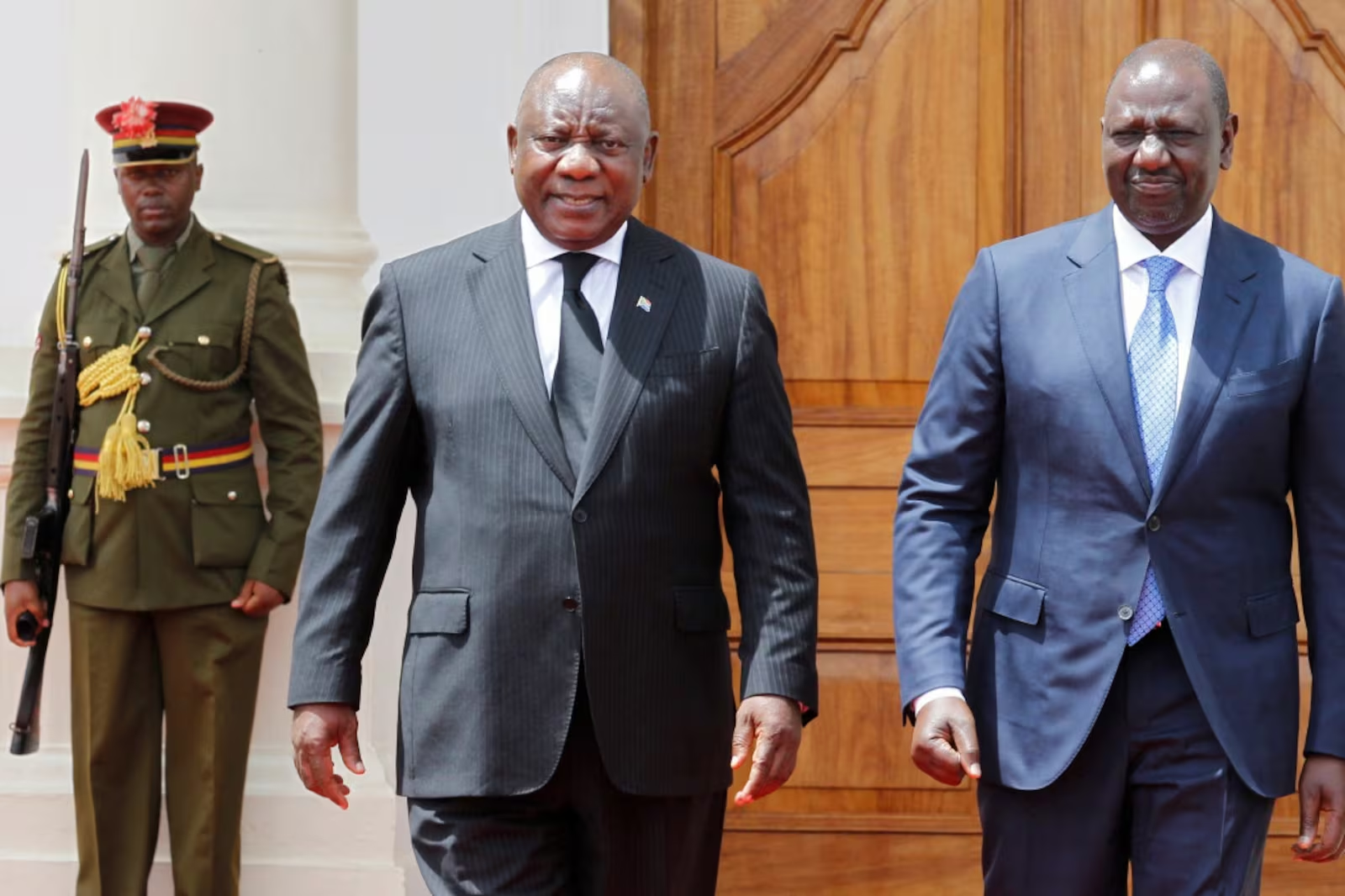
During a June 2026 state visit with Kenyan President William Ruto, President Ramaphosa explicitly addressed these diplomatic and economic tensions. Ramaphosa insisted that “South Africans are not xenophobic” and announced the global envoy deployment to clearly communicate the country’s official stance on migration.
However, the domestic political reality on the ground tells a very different story. Ahead of the 2026 local elections, anti-immigrant sentiment has surged dramatically across the nation. A recent Gov-Dem Survey revealed that an alarming 73% of South Africans harbor deep distrust toward African immigrants. Major political organizations, including ActionSA, the Inkatha Freedom Party, and the MK Party, have capitalized on this public mood by openly supporting protests against undocumented migrants.
Unpacking the 2026 Revised White Paper
To address public frustration and systemic inefficiencies, the South African Cabinet approved the Final Revised White Paper on Citizenship, Immigration, and Refugee Protection in March 2026. This sweeping legal overhaul moves the country away from a basic compliance-based system toward a highly strategic, security-driven framework.
One of the most profound changes is the introduction of a Points-Based System (PBS). Moving forward, citizenship and permanent residency will no longer be granted mechanically based on the number of years lived in the country. Instead, applicants will be rigorously assessed on their unique skills, economic investments, and overall social contributions.
Additionally, the Department of Home Affairs is fundamentally overhauling civil registration by launching the Intelligent Population Register (IPR). This digital system will mandatorily capture biometric data for all individuals within South Africa to curb illegal immigration and combat identity fraud. To end the “scandal of invisibility,” the state will enforce universal digital birth and death registrations for everyone, regardless of their legal immigration status.
Proprietary Data: Old System vs. 2026 Policy Reforms
To better understand the sheer magnitude of these changes, here is a custom breakdown of the structural shifts in South Africa’s new approach:
- Citizenship Pathway: Previously time-dependent; now strictly merit-based via the new Points-Based System.
- Refugee Processing: Previously allowed inland applications; now restricted exclusively to virtual platforms and designated ports of entry.
- Overstay Penalties: Previously resulted in complex bans and undesirability status; now replaced by immediate and substantial administrative fines.
- Work Visas: Fragmented general and critical skills visas are now consolidated into a highly flexible Skilled Worker Visa.
- Human Trafficking: Previously granted automatic permanent residency for state witnesses; now heavily conditional and tied strictly to ongoing law enforcement cooperation.
The First Safe Country Principle and SADC Impact
Perhaps the most controversial element of the 2026 reforms is the strict enforcement of the First Safe Country Principle. Under this new legal rule, asylum seekers who pass through other stable nations before reaching South Africa will be automatically denied asylum.
This policy threatens to cause severe ripple effects across the Southern African Development Community (SADC). Smaller neighboring states like Eswatini, Mozambique, and Malawi simply lack the financial resources and legal frameworks to absorb the redirected flow of migrants.
Experts warn that this unilateral policy shift undermines regional integration and effectively exports South Africa’s migration burden to weaker economies. Furthermore, restricted regional migration will likely disrupt crucial financial remittance flows, worsening food security and exacerbating unemployment across the SADC region.
Human Rights and International Legal Commitments
Despite intense domestic pressure, the South African government ultimately decided against withdrawing from the 1951 UN Refugee Convention. The Department of International Relations and Cooperation (DIRCO) warned that withdrawing would severely damage South Africa’s diplomatic standing.
Furthermore, legal experts confirmed that withdrawing from the international treaty would offer no real domestic benefit. The South African Constitution’s Bill of Rights already guarantees fundamental protections such as access to basic emergency healthcare and protection from deportation to dangerous territories (non-refoulement) to everyone within its borders, regardless of their nationality.
Modernizing Visas for Economic Growth
While the government is actively tightening asylum rules, South Africa is simultaneously attempting to attract high-net-worth individuals and critical global talent. The government has formally recognized that its historical visa regime was a bureaucratic stumbling block that hindered national economic growth.
In response, modern frameworks like the Start-up Visa and Remote-Work Visa have been introduced to attract global entrepreneurs and digital nomads. The government is also launching a brand-new Sports and Arts Visa to position the country as a premier destination for international athletic tournaments and cultural events.
To combat severe administrative bottlenecks, the state is implementing the Electronic Travel Authorisation (ETA). This fully digital application system incorporates artificial intelligence and advanced machine learning to quickly detect fraud and expedite legitimate visa processing.
Actionable Insights for Policymakers and Migrants
For regional leaders and prospective migrants, navigating the 2026 landscape requires immediate strategic adjustments:
- For SADC Governments: States must urgently negotiate formal bilateral migration and labor mobility agreements with South Africa to protect their citizens and regulate cross-border economic flows.
- For Foreign Investors: Businesses should immediately leverage the new Trusted Employer Scheme (TES), which pre-vets reliable companies to dramatically reduce the bureaucratic delays of hiring skilled foreign labor.
- For Asylum Seekers: Individuals must understand that inland asylum applications are no longer valid; all refugee claims must be processed digitally or at official border posts upon immediate arrival.
Balancing Sovereignty and Continental Leadership
South Africa currently finds itself walking an incredibly delicate diplomatic tightrope. On one hand, the government is constitutionally bound to protect human rights, secure its borders, and manage a struggling domestic economy. On the other, it must maintain its vital geopolitical influence and trade partnerships across the continent.
During their recent summit, Kenyan President Ruto noted that Africa’s voice in the global order is rapidly growing, highlighting South Africa’s crucial leadership role in the G20. President Ramaphosa echoed this sentiment, proudly stating that South Africa will remain “noisy” on the global stage when advocating for broader African interests.
Ultimately, the long-term success of this new migration diplomacy drive will depend entirely on practical execution. If the newly deployed diplomatic envoys fail to convince the continent that South Africa is genuinely addressing the root causes of xenophobia—rather than just managing public relations—the diplomatic and economic costs will only continue to mount.
















Leave a Reply