
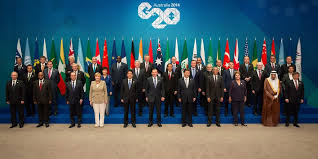
As the 2025 G20 Leaders’ Summit draws near, hosted in Johannesburg, global attention is fixed on South Africa, the first African nation to steer this powerful forum. Assuming the presidency on 1 December 2024, South Africa has championed the theme of “Solidarity, Equality, and Sustainability,” aiming to accelerate global progress toward the 2030 Sustainable Development Goals (SDGs). This moment is seen as a crucial opportunity to place the development priorities of the African continent and the Global South firmly onto the international agenda.
Understanding the G20 and the B20
For readers navigating the complexities of international economic governance, understanding the key players is essential.
What is the G20?
The G20, or Group of Twenty, is an influential international forum composed of 19 countries, plus the European Union and the African Union. Initially established in 1999 following the Asian financial crisis as a meeting for finance ministers and central bankers, it was elevated to include heads of state in 2008 in response to the global financial crisis. Collectively, G20 members represent about 85% of global GDP, 75% of international trade, and two-thirds of the world’s population. The grouping plays a critical role in shaping global economic policy and fostering financial stability.
The G20 operates primarily through two complementary tracks: the Sherpa Track, which addresses broader socioeconomic issues like health, climate, and development, and the Finance Track, led by finance ministers and central bank governors, which focuses on fiscal policy, financial regulation, and international taxation.
What is the B20?
The Business 20 (B20) is the official G20 Engagement Group dedicated to dialogue with the global business community. Established in 2010, the B20 serves as a strategic conduit for companies and business organisations to articulate their perspectives on global economic and trade issues.
The B20’s primary goal is to represent the interests of the business community, advocate for policies that promote economic growth and development, and deliver impactful, actionable policy recommendations to the G20 leaders. The host of B20 South Africa is Business Unity South Africa (BUSA), and its theme is “Inclusive Growth and Prosperity through Global Cooperation”. To achieve this, the B20 focuses on eight critical areas through dedicated task forces, including Trade & Investment, Energy Mix & Just Transition, Digital Transformation, and Industrial Transformation & Innovation.
Why This Matters for South Africans and African Countries
The G20 Presidency is highly important for South Africans and the broader continent because the decisions taken at this level have tangible, real-world effects, influencing everything from the price of food and fuel to the pace of economic recovery and the resources available for climate adaptation.
South Africa’s presidency is designed to leverage this influence to address core African development concerns. President Cyril Ramaphosa highlighted four core priorities aimed at fundamentally helping South Africa and African countries:
1. Debt Sustainability: Addressing the crushing debt burdens faced by low-income nations that limit their ability to invest in infrastructure, healthcare, and education. Africa currently bears a debt stock of about $1.8 trillion, with annual debt service around $90 billion, which severely restricts public spending.
2. Mobilising Finance for a Just Energy Transition: Securing agreement on increasing the quality and quantity of climate finance flows to developing countries, ensuring the shift to clean energy is equitable.
3. Strengthening Disaster Resilience: Pushing for global financial institutions and the private sector to scale up post-disaster reconstruction tools, particularly for vulnerable countries recovering from climate-induced disasters.
4. Harnessing Critical Minerals for Inclusive Growth: Championing the idea that countries and local communities endowed with resources critical for the energy transition must benefit the most through value addition, industrialisation, and green manufacturing, moving away from purely extractive relationships.
Detailed Pathways to African Economic Advancement
The Presidency has initiated several detailed actions and frameworks specifically designed to unlock development potential across Africa:
• Financial Architecture Reform: South Africa advocates for fairer assessment frameworks regarding sovereign credit ratings to lower risk premiums and borrowing costs for developing economies. The High-Level Dialogue on Debt Sustainability held at the African Union Headquarters in Addis Ababa framed the goal as seeking a rebalanced, transparent, and development-first global debt architecture, moving beyond bailouts. Proposed reforms include adopting faster debt treatment under the G20 Common Framework and considering climate and development-related instruments in restructuring.
• Boosting Infrastructure and Investment: The National Treasury is leading the effort to position infrastructure as a lever for inclusive growth. Initiatives include developing a framework for effective project planning to create pipelines of bankable projects, promoting blended finance de-risking measures to attract private capital, and creating a toolkit for cross-border infrastructure to facilitate regional integration. Success in these areas is aimed at increasing private sector participation to meet South Africa’s National Development Plan goal of 30% investment-to-GDP.
• Industrialisation and Digital Transformation: Key legacy outcomes include launching the Artificial Intelligence (AI) for Africa Initiative for multilateral and multistakeholder cooperation. Furthermore, the G20 Africa Cooperation Agenda on Trade and Investment aims to strengthen growth potential by harnessing support for the implementation of the African Continental Free Trade Area (AfCFTA) and mobilizing investments into Africa’s productive sectors. The B20 focuses specifically on industrial transformation and innovation to advance the development of emerging markets.
• Health Equity: The South African G20 health agenda emphasizes equitable multilateral solutions, focusing on accelerating Universal Health Coverage (UHC) through a Primary Health Care (PHC) approach. This is vital given that over 4.5 billion people globally lack access to essential health services. Priorities include strengthening the health and care workforce, stemming Non-Communicable Diseases (NCDs), and advancing science and innovation for health and economic growth.
Addressing Possible Concerns and Challenges
While the G20 presidency presents massive opportunities, concerns about implementation and the structural drivers of global inequality must be addressed.
The Pervasive Threat of Inequality: The underlying challenge the G20 faces is the “inequality emergency,” where historical and current policy choices have led to high concentrations of wealth and power. Globally, the richest 1% captured 41% of all new wealth between 2000 and 2024, far outpacing the gains of the bottom half. This structural inequality, driven by policies favouring corporate interests, financial deregulation, and ineffective taxation, undermines democracy and social progress.
Translating Policy into Action: There is a concern about whether South Africa can successfully translate its policy blueprints into “real impact” on issues like climate finance and debt relief. Furthermore, in a volatile international system, there is a risk of powerful states acting unilaterally, moving away from a cooperative, rules-based order, which could entrench unequal exchange patterns.
Mitigation and Accountability: South Africa is actively addressing these concerns through several mechanisms. The Presidency is committed to fostering inclusivity by engaging civil society through various engagement groups, including the B20, L20 (Labour), W20 (Women), and potentially the new Township20 (TS20) engagement group, which highlights local economies. Crucially, the G20 Extraordinary Committee of Independent Experts on Global Inequality has recommended establishing an International Panel on Inequality (IPI), inspired by the success of the IPCC, to provide authoritative, technical analysis of inequality trends and the impacts of proposed policies. This permanent legacy of the South African Presidency would help ensure that future policymaking is continually informed by evidence to combat this global scourge.
By focusing on institutional reforms, tackling debilitating debt, and prioritizing inclusion, South Africa is using its time at the G20 helm not merely to host a meeting, but to advocate for a profound and necessary restructuring of global economic power.










Leave a Reply