
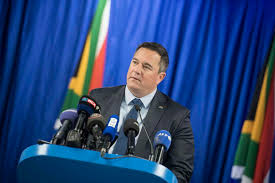
South Africa, 20 October 2025 – South Africa’s Democratic Alliance (DA) has ignited a significant political and economic debate by tabling a new bill aimed at replacing the country’s Black Economic Empowerment (BEE) legislation, setting the stage for an intense ideological conflict within the fragile Government of National Unity (GNU).
The DA, the second-largest party in the GNU, announced the introduction of the Economic Inclusion for All Bill, designed to repeal all race-based preferential procurement provisions. According to DA Head of Policy Mathew Cuthbert, the party acknowledges that the racism of the past needs redress, but insists that shifting focus to poverty over race will be more effective in uplifting the disadvantaged.
The Core Policy Shift
Since its inception in 1993, and its evolution into Broad-Based Black Economic Empowerment (B-BBEE), the policy has been intended as a means to redress the legacy of Apartheid by substantially transferring the ownership, management, and control of South Africa’s economic resources to the majority of its citizens. However, the DA argues that the 30-year record of BEE is clear: it has failed those who need it most, enriching only a small, politically connected elite—a practice often referred to as Narrow-Based BEE (N-BBEE).
The proposed Economic Inclusion for All Bill aims to fundamentally change the yardstick for empowerment. Instead of relying on crude racial classifications, the policy would use need and poverty as the proxy for disadvantage.
The proposed reforms focus heavily on government procurement, seeking to turn it into an instrument for fighting poverty and creating opportunity through an objective, outcome-based system. This involves an alternative empowerment scorecard that would replace the existing B-BBEE scorecard. This new framework would award points to bidders based on their demonstrable contributions to the UN’s Sustainable Development Goals, assessing factors like:
• Ending poverty and hunger.
• Promoting health and education.
• Job creation and industrialisation.
Under this system, the DA contends that new small businesses would be assessed on their ability to alleviate poverty and deliver social good, rather than being disqualified by “racially bean-counting the ownership or management” of the entity.
BEE: A Roadblock to Investment?
The push for reform comes amidst South Africa’s prolonged economic stagnation. The country has endured 15 years of weak economic growth, with the economy growing by only 1% on average for more than a decade, and an unemployment rate exceeding 33%.
Critics argue that current race-based legislation actively discourages foreign investment, stunting economic growth and job creation. The business and investment community collectively views BEE as the most serious roadblock to investment into South Africa, particularly due to legal requirements demanding ownership transfer.
A prominent recent case highlighting this issue is that of the international satellite internet provider, Starlink. The service has not launched in South Africa because regulatory requirements mandate that applicants for electronic communications network licences must have a minimum 30% equity ownership held by persons from historically disadvantaged groups. The insistence on global investors sacrificing 30% ownership is described as “ludicrous” and a practice that “barricades the door to foreign investment opportunities”. In contrast, other African nations, such as Kenya, have scrapped similar ownership requirements to attract investment and advance the knowledge economy.
Empirical analysis of the impact of BEE on firms listed on the Johannesburg Stock Exchange (JSE) has also shown inconclusive results. Research indicates that BEE has had very little impact on firm behaviour so far. If there is an effect, there is weak, statistically non-significant evidence suggesting that BEE in general, and the BEE ownership score specifically, may have a negative effect on investment and labor productivity.
Political Instability and Policy Conflict
The DA’s proposal sets up an inevitable policy confrontation with its coalition partner, the ANC, which maintains that BEE legislation is key to addressing persistent racial disparities. ANC insiders, including Deputy President Paul Mashatile, have been criticized by the DA for being “determined to keep the status quo” and defending a system that benefits them.
Despite the policy disagreements, DA policy head Mathew Cuthbert emphasized that working within the GNU does not require total alignment: “The DA may be in coalition with the ANC in government, but it doesn’t mean we have to agree with them all the time,”.
However, the DA’s aggressive stance, which includes initiating major court challenges against key ANC policy initiatives like the National Health Insurance Bill, Employment Equity reforms, and the Expropriation Act, has already raised concerns about the party’s confrontational posture within the coalition.
The ANC’s leadership has acknowledged the tension, with Secretary-General Fikile Mbalula describing the relationship between the two parties as “like milk and oil,” noting that the DA behaves exactly as an opposition party should. For the DA, the Economic Inclusion for All Bill is presented as the only way forward to end elite race-based enrichment and deliver genuine economic growth and opportunity for all South Africans.











Leave a Reply