
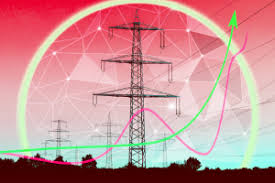
South Africa’s electricity tariffs continue their steep upward trajectory, placing significant pressure on households and businesses, despite regulatory attempts to curb Eskom’s massive tariff requests. The National Energy Regulator of South Africa (NERSA) recently approved multi-year increases, though they were substantially lower than Eskom’s initial proposals.
Fears regarding affordability and Eskom’s long-term financial stability persist, exacerbated by the power utility’s massive debt and declining sales, leading experts to warn of a “death spiral”.
Factual Data Confirms Unprecedented Hikes
The approval by NERSA includes a 12.7% electricity tariff increase for the 2025/26 financial year. This hike, while impactful, was significantly lower than Eskom’s initial request of 36.15% for the same period. Subsequent increases are also approved: 5.36% for 2026/27 and 6.19% for 2027/28.
Historically, South Africa’s electricity tariffs were once among the world’s best, with prices fluctuating between 5 cents per kWh and 10 cents per kWh between 1974 and 1994. However, the situation took a significant turn for the worse shortly after the first implementation of load-shedding in 2008.
Key historical facts highlight this drastic escalation:
• Between 1974 and 2007 (33 years), the price-per-kWh increased by a total of 296%, working out to a compound annual growth rate (CAGR) of about 4%.
• Between 2007 and 2024 (17 years), the average electricity tariff skyrocketed from 19.80c/kWh to 188.07c/kWh, a jump of 849.85%, resulting in a CAGR of 14.16%.
• More recently, the average residential price per kWh increased by 134% since 2016, rising from R1.08/kWh in 2016 to R2.53/kWh in 2025. This increase explains why Eskom’s revenue more than doubled (up 111%) despite the amount of electricity sold dropping by 11.5% over the same period.
Causes: Corruption, Debt, and Operational Inefficiency
Economists and energy analysts point to mismanagement, corruption, and a bloated and overpaid workforce as primary drivers of these high costs, stressing that South Africans should not pay the price for years of state capture.
The primary reason for the significant price increases has been the ballooning capital expenditure (CAPEX) on new power plant capacity. Eskom spent roughly R680 billion on Medupi, Kusile, two peaking power plants, and coal fleet restoration projects between 2007 and 2021. Medupi and Kusile alone saw their original budgets of R163 billion swell to well over R300 billion, marred by delays and design defects linked to corrupt contracts.
Furthermore, Eskom’s financial difficulties are compounded by:
• Declining Sales: Eskom’s revenues are under pressure due to declining sales, averaging a 0.5% drop from 2006 to 2022, accelerating recently due to the rapid uptake of private rooftop solar. The amount of electricity sold dropped from 214,487 GWh in 2016 to 189,723 GWh in 2025.
• Reliance on Diesel: The utility’s increased reliance on expensive peaking stations, which burn diesel in Open Cycle Gas Turbines (OCGTs), pushes costs way over budget.
• The Death Spiral: The major electricity price increases incentivize customers, particularly businesses, to go off-grid, forcing Eskom to charge remaining customers even more per unit to cover operational costs (including salary increases above inflation), perpetuating the “death spiral”.
The Affordability Crisis
Public consultations on Eskom’s tariff hikes revealed widespread concern over affordability, with domestic customers worrying they would be forced to “choose between buying food or electricity”.
Middle-income households, in particular, tend to be hit disproportionately by the tariff hikes, as low-income bands are often sheltered by subsidized tariffs. The recent 12.7% increase, in conjunction with planned increases for 2026/27 and 2027/28, are positioned well above the rate of inflation, widening the gap between electricity prices and the cost of living.
In a global context, South Africa’s household electricity pricing is notably high. According to one analysis, South African households pay $186 per megawatt-hour (MWh), making it the seventh most expensive electricity among G20 nations on a direct pricing basis. When affordability is measured using purchasing power parity (the ‘Big Mac Index’ equivalent), South Africa ranks as the fourth worst among G20 nations.
Regulatory Framework Suspends Cost-Efficiency ‘Hat’
Experts argue that the increases, often approved by NERSA, should not have been permitted. Efficient Group chief economist Dawie Roodt even suggested that NERSA should be shut down, claiming it has no idea what energy prices should be.
The National Energy Regulator acknowledges that the current Multi-Year Price Determination (MYPD) methodology has failed to provide stable prices and has resulted in escalating prices and unreliable supply. The methodology, based on average costs, has lumped utility costs together, effectively “socialising all costs” and resulting in an average price that is too high for some users and too low for others, sending distorted economic signals.
NERSA is actively reviewing and proposing an overhaul of the current methodology, aiming for a system that eliminates averaging and cross-subsidies. The proposed new framework centres on three core principles to achieve cost-reflective tariffs:
1. Activity Based Costing (ABC): Unbundling tariffs for each activity across the electricity value chain, such as generation (Gx), transmission (Tx), distribution (Dx), and trading (Td).
2. Differentiated Load Profiles: Determining costs based on different energy services needed, such as baseload, mid-merit, peak, and ad-hoc/emergency demand, which require different types of generation plants.
3. Marginal Price Tariffs: Using a merit order dispatch approach (least cost first) to set tariffs for each load type, reflecting market reality.
Under this proposed marginal pricing approach, the variable load (peak demand and grid-based backup) is likely to be expensive and should not be socialized. Initial estimates suggest the tariff for expensive variable load could be in the order of R3.50 per kWh. The migration away from the outdated revenue-based methodology is intended to clarify the true cost of service and provide a realistic base for cost-reflective tariffs.









Leave a Reply