
The Tripartite Alliance Faces a Historic Rift
The historic Tripartite Alliance that has long dominated South African politics is facing an unprecedented ideological crisis. Over the weekend, the African National Congress (ANC) made a highly public choice to draw a sharp line between itself and its oldest ally, the South African Communist Party (SACP).
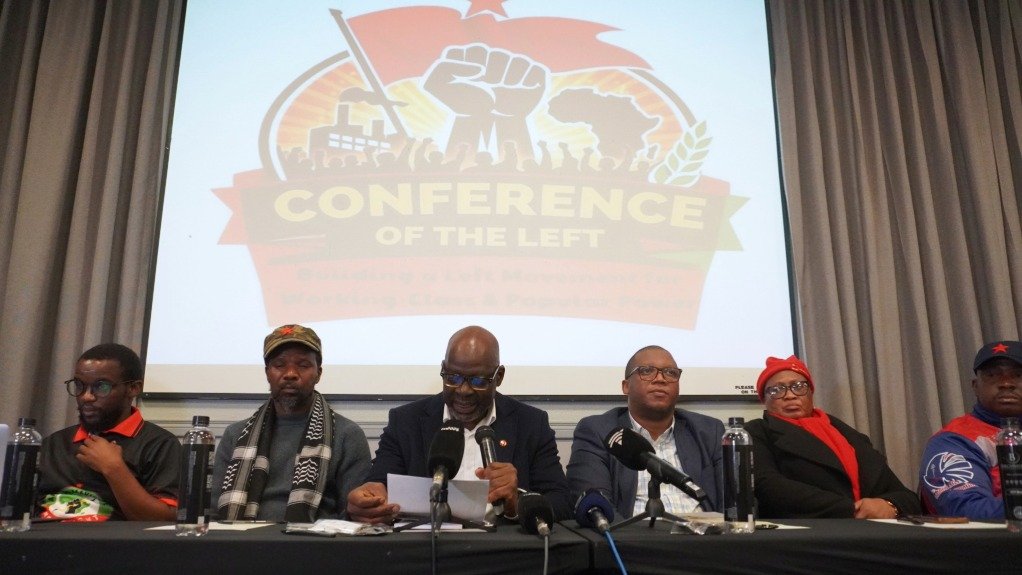
The ANC’s National Executive Committee officially resolved to boycott the SACP’s highly anticipated “Conference of the Left,” which kicked off in Boksburg on May 29, 2026. This move signals deep discomfort with the shifting political landscape ahead of the critical local government elections.
By leaving empty chairs at the conference, the ANC is sending a clear message to its junior partner. The ruling party will not tolerate the SACP building an alternative tent that accommodates the ANC’s direct electoral threats.
What is the Conference of the Left?
The SACP, alongside a broader steering committee including COSATU, convened this three-day conference at the Birchwood Hotel. It brings together left-wing political parties, trade unions, civic movements, and community organisations.
Importantly, the gathering is not intended to form a new political party. Instead, it aims to establish a “Council of the Left” to act as a permanent coordinating platform for working-class and popular power.
The guest list features a wide array of political formations and organisations, including:
- The Economic Freedom Fighters (EFF) and the uMkhonto weSizwe Party (MKP).
- Trade unions like NUMSA and the Congress of South African Trade Unions (COSATU).
- Various civic organisations, anti-capitalist groups, and small business formations.
Why is the ANC Boycotting the Event?
The ANC delivered a blistering critique of the conference, openly rejecting its framing as a genuine leftist gathering. ANC Secretary General Fikile Mbalula labelled the summit a “coalition of negation” united only by what they stand against: the ANC in government.
The ruling party’s core objection lies in the eclectic guest list. The ANC argues that seating chambers of commerce alongside the Bolshevik Party, and the MK Party alongside trade unions, strips the event of any real leftist meaning.
Furthermore, the ANC accused the SACP of crossing an ethical red line. Luthuli House pointed out that the conference provides a platform to political forces whose leaders were implicated in state capture by the Zondo Commission.
The SACP Fights Back Against “Arrogance”
The SACP did not hold back in its response, officially dismissing the ANC’s posture as arrogant, inward-looking, and self-glorifying. The communist party argued that the ANC is wrongly assuming any independent conference is a plot against the ruling party.
The SACP strongly defended its diverse guest list. They clarified that groups like NAFCOC represent struggling black micro-enterprises and township traders who are also squeezed by monopoly capital, not wealthy corporate elites.
The SACP insists that the deepening crisis of unemployment, poverty, and austerity cannot be confronted through fragmentation. They argue that alliance discipline cannot mean silence in the face of the ANC’s current Government of National Unity (GNU) and state decay.
An Emerging Alliance with the MK Party?
Adding fuel to the fire is the growing alignment between the SACP and the MK Party, a populist left-wing party led by former president Jacob Zuma. The MK Party has been maneuvering behind the scenes to solidify an alliance with the SACP.
The MK Party’s explicit goal is to unite progressive forces to jointly challenge President Cyril Ramaphosa’s GNU, which it views as a neoliberal agenda. SACP leader Solly Mapaila previously stated it would be “foolhardy” not to engage with forces like the MK Party.
What This Means for the 2026 Elections
This public fallout comes exactly 163 days before the November 4 Local Government Elections. The timing is critical, as the ANC seeks to consolidate its base amid severe pressure to fix deteriorating municipalities.
For the SACP, this conference marks a bold step in asserting its independence. Following resolutions from their Special National Congress, the SACP plans to independently contest the 2026 local government elections.
As the Conference of the Left proceeds, the South African political landscape faces a historic realignment. The working-class movement is actively seeking new vehicles for power, proving that the traditional centre of South African politics can no longer hold.






Leave a Reply