
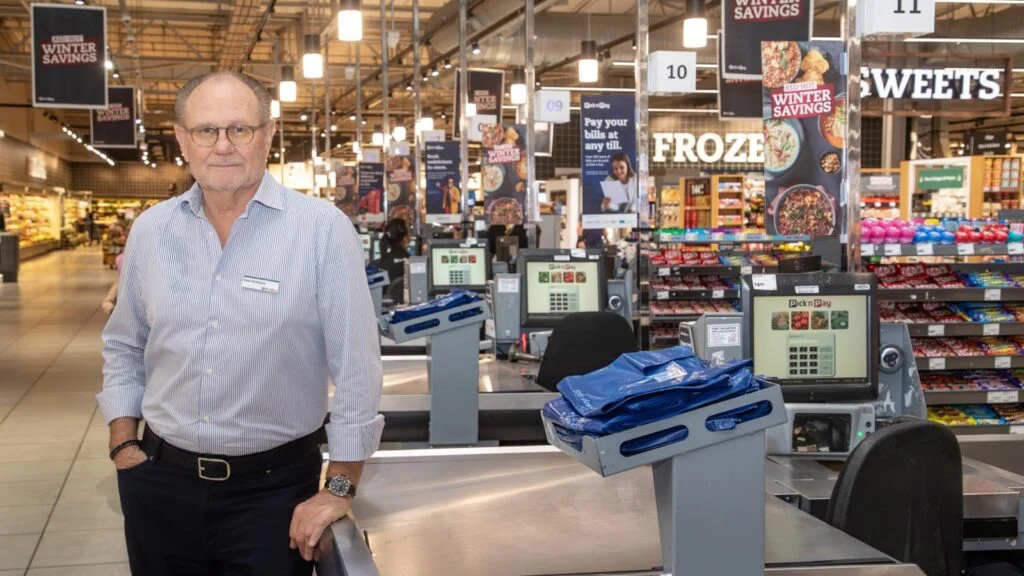
Pick n Pay Faces a Historic Financial Crisis
South African grocery giant Pick n Pay recently found itself fighting for its survival. In the 2024 financial year, the company faced technical insolvency when its total liabilities exceeded its assets by R183 million.
Due to a heavy debt burden, the retailer breached all of its debt covenants, forcing lenders to demand strict new terms. To navigate this crisis, the board brought back former CEO Sean Summers to lead a massive, multi-year recovery strategy.
Summers acknowledged that fixing the company would be incredibly difficult and expensive. He revealed that Pick n Pay had to effectively “burn” between R6 billion and R10 billion of the value created by its highly successful subsidiary, Boxer, to keep the core business from collapsing.
The Saving Grace: Boxer Retail’s JSE Listing
To raise the massive amounts of cash needed to pay off debt and fund the turnaround, Pick n Pay turned to its star performer: Boxer Retail. In November 2024, Boxer was listed on the Johannesburg Stock Exchange (JSE) in a highly anticipated Initial Public Offering (IPO).
The initial listing raised a staggering R8.5 billion by selling around 40% of Boxer’s issued share capital. Boxer is currently South Africa’s leading discount grocery retailer, showing exceptional performance with a 12.3% turnover growth to R46.7 billion in the 2026 financial year.
To further strengthen its balance sheet, Pick n Pay made another major financial move in May 2026. Here are the key details of the transaction:
- The retailer sold an additional 12.5% stake (57.3 million shares) in Boxer to institutional investors.
- The shares were sold at R82 per share, raising another R4.7 billion.
- In total, Pick n Pay raised roughly R13.2 billion across both transactions while retaining a controlling 53.1% stake in Boxer.
Restructuring and Nationwide Store Closures
Armed with fresh capital, Pick n Pay has been rapidly resetting its store footprint. During the 2026 financial year, the company saw a net closure of 56 stores nationwide.
The company closed 39 company-owned stores, while its franchised network took an even bigger hit. The number of franchised supermarkets dropped from 260 to 211, and 29 franchised liquor stores were also shut down.
Despite the closures, Pick n Pay’s online delivery business, ASAP!, showed incredible resilience. Fully integrated with their Smart Shopper loyalty program, online sales skyrocketed by 32.7% over the financial year.
Rebalancing Labour Costs to Protect Jobs
Another massive hurdle for the retailer has been its high operating costs. Summers noted that the company’s historical employment practices have become unaffordable, with employee costs making up over 40% of trading expenses.
To address this, Pick n Pay initiated a formal Section 189 consultation process with labour unions. While this process is often associated with job cuts, Summers insisted the main goal is to improve operating efficiencies and create a sustainable model that ultimately protects jobs in the long term.
When Will Pick n Pay Recover?
Investors looking for a quick fix might have to wait a little longer. Pick n Pay recently announced that it is delaying its break-even target for its core supermarket business to the 2029 financial year, a year later than originally planned.
This delay reflects the harsh realities of the South African retail market and the sheer complexity of the turnaround plan. Following this announcement, Pick n Pay shares initially plunged by over 7% on the JSE.
However, CEO Sean Summers remains highly optimistic about the future. He views the billions spent not as a loss, but as a vital investment to create a “new business” that will thrive for decades to come.











Leave a Reply