
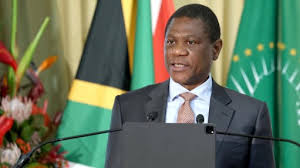
South Africa’s Government of National Unity (GNU) continues to grapple with fundamental disagreements over policy direction and political stability, issues amplified by the current legislative agenda. While Deputy President Paul Mashatile has acknowledged the necessity of a legal framework to stabilize coalitions, the Democratic Alliance (DA), the second-largest coalition partner, is simultaneously advancing highly contentious economic legislation aimed at replacing race-based empowerment.
The Quest for Coalition Stability
The fragility of coalition governments in South Africa has become a central legislative concern. DA MP Siviwe Gwarube sought clarity from Deputy President Mashatile regarding his party’s support for the DA’s private member’s bills intended to stabilize future political arrangements.
Deputy President Mashatile conceded that a legal framework is indeed necessary, acknowledging that the provisions outlined in the DA’s bills address the core issue of instability currently plaguing the political landscape. He committed to convening various stakeholders, including political parties in Parliament, the South African Local Government Association (SALGA), and government institutions, to adopt necessary legislative and policy interventions.
The DA has already published three pieces of legislation for public comment, expecting them to be presented to Parliament within the coming weeks. These bills propose amendments to the Constitution and the Municipal Structures Act of 1998, with the goal of creating a dependable and accountable legal structure for coalition governments across the local, provincial, and national spheres. The DA believes these efforts are critical as the country moves toward the 2024 elections, anticipating that the ANC may lose its national majority and control in several provinces, leading to a “post-ANC South Africa” that requires stable governing models.
Deepening Divide Over Economic Inclusion
Simultaneously, the DA has introduced a significant policy challenge to the GNU’s founding principles by gazetting the “Economic Inclusion For All Bill”. This private member’s bill aims to replace Broad-Based Black Economic Empowerment (BEE) across all legislation.
The DA argues that the long-standing BEE policy has failed, resulting in 44 million citizens being impoverished and 12 million trapped in unemployment, while enriching “ANC insiders” who become billionaires. The party is promoting a new procurement and empowerment model rooted in addressing poverty as a key indicator of disadvantage, moving away from race-based criteria. This system is intended to protect public funds and ensure “genuine empowerment” via a needs-based system.
However, the bill highlights racial tensions and policy friction within the coalition. The ANC, along with its partners like COSATU, has publicly defended BEE, asserting that such race-based legislation is essential for redress. The DA views the strong opposition as evidence that the ANC is protecting its “patronage machine”. While the bill is unlikely to pass, it underscores a major ideological split concerning how South Africa should address the legacy of white minority rule.
Government’s Overarching Development Agenda
Despite these policy battles and instability concerns, the Government of National Unity is focused on implementing the Medium-Term Development Plan (MTDP) 2024–2029. This plan centers on three strategic priorities: achieving inclusive growth and job creation (designated as the Apex Priority), reducing poverty and alleviating the high cost of living, and building a capable, ethical, and developmental state.
In line with the objective of building a capable state, the Deputy President noted that Parliament is actively processing key legislative items, including the Public Service Commission Amendment Bill and the Public Service Amendment Bill. These reforms are designed to professionalize the public service, enhance accountability, and clarify the roles of both elected officials and administrators at all levels of government.
To tackle poverty and the high cost of living, the MTDP includes policy reforms such as extending the Social Relief of Distress (SRD) grant until March 2026. The government is also progressing with the implementation of the National Health Insurance (NHI) Act to guarantee quality health services for all citizens, irrespective of their socioeconomic status.
The GNU is committed to efficient collaboration in formulating budgetary frameworks, having learned lessons from the valuable experience of the 2025 budget process, which saw an unprecedented postponement of the Budget Speech. The goal is to ensure a stable fiscal position and execute an economic program agreed upon by all government partners.












Leave a Reply