
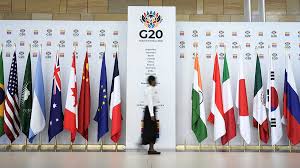
The 2025 G20 Johannesburg Summit, the upcoming twentieth meeting of the Group of Twenty, is scheduled to convene heads of state and government from 22 to 23 November 2025 at Nasrec, Johannesburg. This summit is historically significant, marking the first time the G20 meeting has been held on the African continent.
However, the landmark meeting is overshadowed by diplomatic tensions and fundamental disagreements, particularly with the United States, raising questions about the final outcome of the crucial international gathering.
South Africa’s Agenda: Solidarity, Equality, Sustainability
South Africa assumed the G20 presidency from 1 December 2024 to November 2025. The host nation adopted the central theme, “Solidarity, Equality, Sustainability,” reflecting an intention to advance the development agenda established by the previous Global South presidencies of Indonesia, India, and Brazil.
South Africa’s foreign policy is guided by four strategic pillars, including the African Agenda, South-South Cooperation, and Multilateralism. Key high-level priorities for the summit agenda include:
• Inclusive economic growth, industrialisation, employment and reducing inequality.
• Food security.
• Artificial intelligence and innovation for sustainable development.
President Cyril Ramaphosa emphasized that South Africa’s G20 Presidency would prioritize Africa’s development. The nation is also using its presidency to advocate for global debt reform and mobilize support for developing economies in Africa and the Global South.
US Boycott and the Declaration Dilemma
The summit is taking place amid rising diplomatic friction between Washington and Pretoria. US President Donald Trump announced a complete boycott of the event, an unprecedented move for the United States at a G20 summit.
Trump cited what South Africa characterizes as “false claims” of race-based persecution, including violence and death, against the white Afrikaner minority and “illegal confiscation” of their land as the reason for the boycott. The US had also previously derided South Africa’s agenda priorities, specifically citing opposition to issues concerning diversity, equity, inclusion, and climate change.
The diplomatic standoff intensified over the customary final document of the summit. The US formally warned South Africa against pushing for a consensus Leaders’ Declaration. Washington insisted that without US agreement, the outcome document must be framed solely as a Chair’s Statement to accurately reflect the absence of consensus, arguing that South Africa’s priorities run counter to US policy views.
Securing a full joint declaration is a high priority for President Ramaphosa. In response to US pressure, Ramaphosa publicly stated that South Africa “will have a declaration,” and asserted, “We will not be bullied. We will not agree to be bullied,” emphasizing that the talks were proceeding well.
Despite the official boycott, a White House official confirmed that a representative from the US Embassy would attend the formal handover ceremony at the conclusion of the summit, but would not participate in any talks. South African officials, noting the US is the incoming G20 president in December, are expected to deny this request, citing the need for an official of “suitable seniority”.
The Full Picture: Other Key Absences
The Johannesburg summit faces significant challenges due to multiple notable absences from heads of state. Five of the G20’s nineteen member countries are not sending their top leaders:
• Chinese leader Xi Jinping is skipping the event, with Chinese Premier Li Qiang attending in his place.
• Argentina’s President Javier Milei joined the US boycott and is sending Foreign Minister Pablo Quirno as his substitute.
• Mexican President Claudia Sheinbaum also declined to attend.
• Russian President Vladimir Putin cannot travel to South Africa due to an outstanding International Criminal Court arrest warrant.
The fact that the two largest global economies, the US and China, are not represented by their top leaders is considered a significant blow, making it unlikely that major deals will be struck on the spot.
The Business Community’s Input (B20)
Preceding the main event, the B20 (Business 20) Summit—the official engagement group between the G20 and the international business community—was hosted in South Africa by Business Unity South Africa (BUSA).
The B20 South Africa leadership theme was “Inclusive Growth and Prosperity through Global Cooperation,” focusing on amplifying the African perspective in global discussions. The B20 process culminated in the submission of 30 evidence-based recommendations to the G20 Presidency, centred around five strategic themes:
1. Capital access for infrastructure and industry.
2. Food security and agriculture.
3. Climate-responsive economies (coupling a just energy transition with growth).
4. Digital and skills transformation.
5. Industrial innovation and inclusion.
The B20 leadership cycle introduced a focus on gender balance, with women comprising half of the B20 South Africa leadership, a historical first for the forum. Furthermore, legacy initiatives from prior presidencies, such as the One Global Women Empowerment (OGWE) platform and the Carbon Centre of Excellence, continue to operate, ensuring the long-term impact of business-led policy recommendations beyond a single presidential term.
The political maneuvering surrounding the Johannesburg summit highlights the G20’s role as a platform for global economic policy and the ongoing diplomatic struggle between the Global South’s push for a development-focused agenda (centered on debt reform, climate action, and equality) and the rising trend of unilateralism and protectionism. Despite the high-profile absences and pressure, South Africa maintains that the G20 process remains on track to deliver critical outcomes for a more inclusive global economy. The final issuance of a Leaders’ Declaration will be a key indicator of the strength of multilateral consensus moving forward.
In essence, a multilateral summit like the G20 is like an orchestra tuning up for a major concert: ideally, every instrument (member nation) plays in harmony to create a cohesive symphony (the joint declaration). However, when key players decide to stay home or demand that the sheet music reflects only their individual interests, the conductor (South Africa) must show strong leadership to ensure the music still plays, even if the final performance sounds more like a chair’s powerful solo than a unanimous concerto.










Leave a Reply