
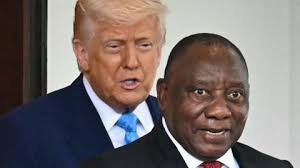
President Cyril Ramaphosa has strongly dismissed the United States’ decision to boycott the upcoming G20 summit in Johannesburg, declaring that the withdrawal is “their loss” as diplomatic tensions surge over South Africa’s domestic policies and crucial trade benefits face imminent threats.
As South Africa prepares to host the G20 summit—the first time the Global 20 meeting has convened on the African continent—President Donald J. Trump announced that no US government officials would attend, triggering a de facto boycott. Argentina’s president Javier Milei also withdrew, sending his foreign minister instead.
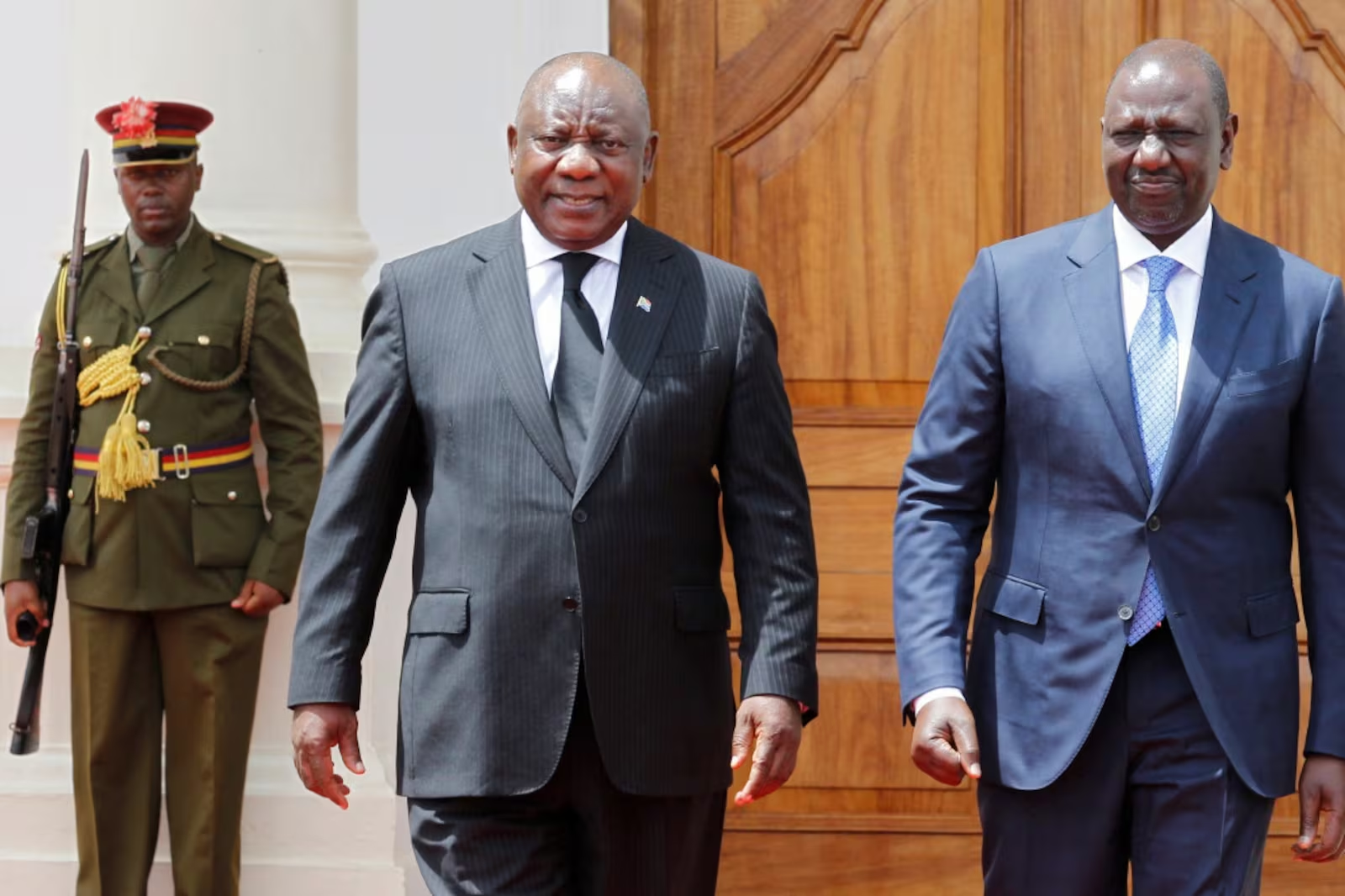
Ramaphosa, speaking in Cape Town, stated firmly that the summit will proceed regardless of the US absence. He warned that boycotts achieve nothing and that the United States is relinquishing an important global role as the world’s largest economy.
US Actions Driven by Land and Foreign Policy
The diplomatic fallout stems from fundamental disagreements over South African policy and its global alliances. The Trump administration cited alleged human rights abuses in South Africa, specifically targeting white Afrikaner farmers and the nation’s controversial new Expropriation Act 13 of 2024.
In February 2025, President Trump signed Executive Order (EO) 14204, which halts foreign aid and prioritizes the resettlement of Afrikaner refugees escaping what the US characterizes as “government-sponsored race-based discrimination”. The US administration claims the Expropriation Act enables the government to seize Afrikaners’ agricultural property without compensation.
The US also criticised South Africa’s foreign policy, including its move to accuse Israel of genocide in the International Court of Justice and its invigorated relations with Iran for commercial, military, and nuclear arrangements. Washington further attacked the G20 summit theme—”Solidarity, Equality, Sustainability”—branding the message as anti-American.
Ramaphosa Rejects “Genocide” Claims
President Ramaphosa has directly confronted the US administration’s rhetoric, especially the claims of a “White genocide”. During a previous official visit, Ramaphosa pushed back against Trump’s repeated claims that White farmers were being executed.
Ramaphosa clarified that people killed through criminal activity in South Africa are “not only White people,” noting that the “majority of them are Black people”. The South African Ministry of International Relations and Cooperation also responded to a post by President Trump on Truth Social, describing the post as “regrettable” and asserting that the claim of persecution against the Afrikaner community is “not substantiated by fact”.
Afrikaner commentators and farmers have also disputed the claims, stating that a “White genocide is not happening”. One academic noted that economically, Whites remain the strongest group in South Africa, with vastly higher average incomes and better access to private healthcare and education.
Economic Stakes: A $20 Million Blow
Beyond the diplomatic spat, the US action poses significant economic threats to South Africa, which is already reeling from new US tariff strategies. The uncertainty centres on the potential loss of preferential trade access under the African Growth and Opportunity Act (AGOA), which has been vital since 2000 in supporting key South African sectors like automotive, manufacturing, and agriculture.
Economic modelling suggests that South Africa’s potential exclusion from AGOA and the imposition of Most Favoured Nation (MFN) tariffs would result in a welfare decline of $20.8 million for the country.
The economic pain is expected to hit the agricultural sector hardest. Specifically, the vegetables, fruits, and nuts category is predicted to absorb the highest impact, with a 1.316% decline in output and a corresponding $61.81 million reduction in the trade balance. The imposition of MFN tariffs would also significantly reduce the trade balance for beverages and tobacco by $32.2 million.
Furthermore, the loss of preferential access threatens employment, especially in labour-intensive sectors. The demand for skilled and unskilled labour in the agricultural subsector (vegetables, fruits, and nuts) is projected to drop by 1.389%, exacerbating South Africa’s existing unemployment crisis.
These trade threats are compounded by new US tariffs, which include a 25% tariff on South African automotive, steel, and aluminium products. The automotive sector alone accounts for 64% of South Africa’s AGOA exports and supports over 110,000 direct jobs.
Seeking a Reset Amid Diversification Drive
Business leaders in South Africa have called for an urgent, unified national response to safeguard export interests. The government is actively negotiating for tariff relief while simultaneously exploring alternative markets.
The upcoming face-to-face meeting between Presidents Ramaphosa and Trump is viewed by stakeholders as a key moment to reset bilateral relations and refocus on mutual economic benefit.
In the meantime, South Africa is bolstering ties with alternative partners. Trade with the European Union, the largest foreign direct investment (FDI) partner, has increased by 44% over the last five years. Preliminary talks are also underway to expand exports of agricultural and industrial goods to China.
Ramaphosa has defended the rushed clean-up of Johannesburg for the G20 as a “benchmark” for broader reforms across the city, insisting that the improvements seen during the summit must continue.



Leave a Reply