
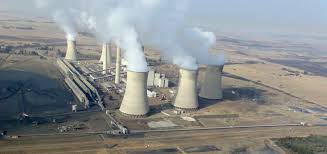
For over a decade, South Africa’s Kusile Power Station has been synonymous with controversy, delays, and ballooning budgets. Originally conceived as a critical measure to boost energy capacity, this massive infrastructure project has gained international notoriety for its staggering cost overruns.
According to energy expert Chris Yelland, when all associated costs are factored in—including capital overruns, increased capitalised interest during delayed construction, and the devastating economic cost of subsequent load-shedding—Kusile is likely “the most expensive coal-fired power station built in mankind’s history”.
This article delves into the financial figures that underpin this shocking claim and examines what went wrong at the South African energy megaproject, comparing it to a strikingly similar venture in Indonesia.
The Staggering Financial and Time Overruns
Kusile Power Station, owned and operated by Eskom, is situated in the Nkangala district of Mpumalanga and was intended to provide a total capacity of 4,800 MW, derived from six 800 MW generating units.
Construction on the project, also known as “Project Bravo,” began in August 2008. Initially, the project was expected to be completed in 2014. The original estimated cost of Kusile was placed at R69.1 billion in 2007 or R81 billion. However, the completion date continued to slip drastically, resulting in continuous schedule and cost overruns.
By the time the final unit (Unit 6) achieved commercial operation in September 2025, the project had taken 17 years and one month to complete. The final estimated cost reached an astonishing R233 billion. This figure represents a project that cost nearly three times its original budget.
The protracted delays and massive costs are not isolated to Kusile alone; its sister project, Medupi Power Station, also suffered significant delays. Medupi, which had an official original price tag of R79 billion, saw its cost escalate to roughly R143 billion, with some sources suggesting figures as high as R300 billion.
A Crucial Comparison: Kusile vs. Paiton
To illustrate the unprecedented nature of Kusile’s costs, analysts often compare it to the Paiton Power Complex on the Indonesian island of Java.
The Paiton complex is comparable in output, with a nameplate capacity of 4,945 MW, and uses similar emissions control technology, specifically Flue Gas Desulphurisation (FGD) scrubbers, which Kusile was the first in South Africa to incorporate.
However, Paiton was constructed under far more complex circumstances, involving multiple phases (Paiton I, II, III, PLN Paiton, and PLN Paiton Baru) and numerous parties, unlike Kusile, which was overseen by the single entity Eskom. Despite this complexity, the Paiton project was completed significantly cheaper and faster.
The construction timeline for the Paiton complex spanned approximately two decades, from 1993 (start of the first phase) to 2012 (commercial operation of the last project). Individual projects within the complex took about five years on average to complete. This means it took Indonesia only two years longer to build five different power station projects than it took Eskom to build Kusile alone.
The total estimated cost for the Paiton complex is approximately $6.3 billion (R109 billion). This is significantly less than Kusile’s R233 billion cost.
| Feature | Kusile Power Station (South Africa) | Paiton Power Complex (Indonesia) |
| Nameplate Capacity | 4,800 MW | 4,945 MW |
| Estimated Final Cost (ZAR) | R233 billion | R109 billion (Estimated $6.3 billion) |
| Construction Duration | 17 years and 1 month (2008–2025) | Approx. 19 years for the complex (1993–2012) |
| Ownership Structure | Built, owned, and operated by single entity (Eskom) | Multiple power stations involving multiple parties |
| FGD Technology Used | Yes | Yes |
The Rot at the Core: Corruption and Management Failures
The dramatic escalation in cost and schedule at Kusile is attributed to a combination of factors, including corruption, inadequate planning, and management deficiencies.
1. Corruption and Design Defects A major contributor to the severity of subsequent load-shedding and the high costs was a corrupt tender awarded to Hitachi Power Africa to supply boiler units for both Medupi and Kusile. This contract, originally valued at R18.5 billion for Kusile, was substantially manipulated to ensure Hitachi won the tender. The former Eskom CEO, Andre de Ruyter, stated that if the contract had been awarded correctly, without corruption, the country would not have experienced the current severity of load-shedding. The boiler units were allegedly not fit for purpose, leading to design defects.
Corruption involving employees has been rampant at Kusile, with arrests made related to fraudulent procurement schemes. One instance revealed a pump unlawfully procured for R857,977, when an identical pump had previously cost R18,835.
2. Management and Organizational Challenges A study assessing the causes of overruns identified that the top five challenges experienced during the implementation of energy megaprojects in South Africa were all related to management and organisation:
• Poor site management (MS = 6.71).
• Inadequate managerial skills (MS = 6.65).
• Poor monitoring and control (MS = 6.53).
• Unstable management structure (MS = 6.41).
• Lack of experience combined with poor organisation structures (MS = 6.29).
These findings suggest a fundamental lack of adequate local management and organisational expertise in South Africa for ensuring the effective implementation of energy megaprojects.
3. Operational and Technical Issues Beyond management failure, specific operational issues exacerbated the problems:
• Schedule Overruns: Slow client decision-making and a shortage of skilled labour were ranked as the number one factors causing schedule overrun. Poor planning and scheduling also ranked highly.
• Cost Overruns: Inaccurate material estimating and shortage of skilled labour were identified as the main factors causing cost overruns.
• Flue Duct Collapse: In late 2022, Units 1, 2, and 3 were taken offline following the collapse of part of a flue duct. This fault, caused by faulty emission control systems and human errors resulting in a cement-like deposit, significantly contributed to South Africa’s worst period of load-shedding.
The Broader Economic Devastation
The failure to complete Kusile and Medupi on time and within budget has had profound national consequences. Had both plants been finished on time and operating at their design capacity of 9600 MW, they would have provided enough power to mitigate six to eight stages of load-shedding.
Instead, the failures contributed to the deterioration of the Eskom generation fleet, resulting in an energy availability factor (EAF) of 58.1% in 2022, down from 78.7% in 2017.
The total cost of load shedding to South Africa’s economy has exceeded R1.2 trillion, a figure equivalent to a quarter of the nation’s entire Gross Domestic Product (GDP). This immense economic loss, combined with the R233 billion capital cost of Kusile, underscores why the power station holds the unfortunate title of the world’s most expensive coal-fired energy megaproject.
Note: The Corruption Perceptions Index (CPI) shows that Indonesia, with a score of 37, ranks worse than South Africa, with a score of 41. Despite the high corruption context cited in Indonesia, the Paiton project phases were successfully implemented at a lower cost than Kusile.








Leave a Reply