
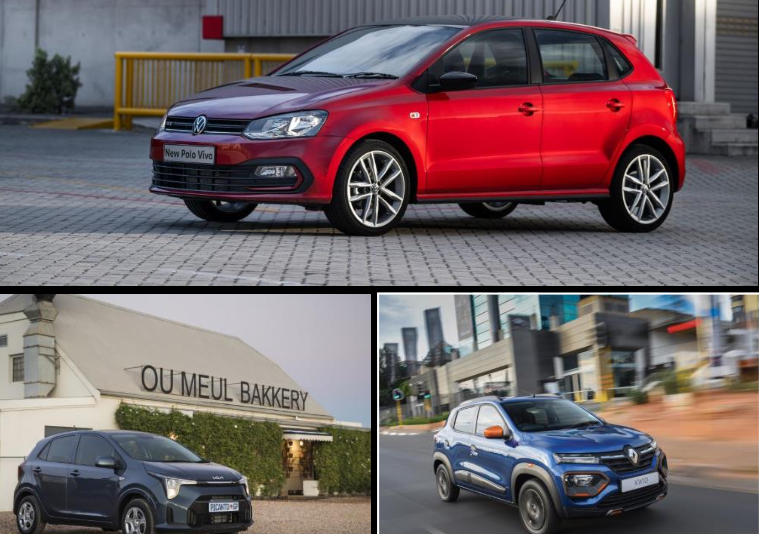
South African first-time buyers and urban commuters face a critical financial decision in 2026 when navigating the highly competitive budget hatchback market. While the affordable sticker price on the dealership floor is the initial draw, the true financial commitment of vehicle ownership lies entirely in the long-term, daily running costs.
Comparing three of the nation’s most popular entry-level vehicles the Volkswagen Polo Vivo, Kia Picanto, and Renault Kwid reveals massive, often hidden disparities in fuel consumption, maintenance plans, and insurance risk.
Here is a comprehensive, data-driven breakdown of what these vehicles actually cost to keep on the road, helping you make an informed and budget-safe purchasing decision in a tough economic climate.
Fuel Efficiency: Which Car Saves You the Most?
With local fuel prices being notoriously volatile due to global oil supply chain disruptions, finding a highly fuel-efficient car is a top priority for most domestic drivers. All three of these vehicles feature relatively small engines, but their real-world consumption varies drastically based on their weight and design.
The Renault Kwid: This is the absolute lightest car of the trio, tipping the scales at just 758 kg. Because its tiny 1.0-litre engine requires significantly less effort to move the chassis, it offers the best real-world fuel economy. Commuters can expect an impressive 5.4 to 5.8 L/100km in mixed driving conditions.
The Kia Picanto: A highly frugal and immensely popular option for city driving, the Picanto uses about 5.5 to 6.0 L/100km in real-world traffic. It is incredibly light, nimble to park, and remarkably cheap to run daily for short-distance commuters.
The VW Polo Vivo: As a larger and much heavier B-segment car (1,063 kg), the Vivo predictably uses the most fuel, averaging between 6.5 to 7.2 L/100km. However, that extra 300kg of weight gives it a much more stable, planted, and comfortable ride on the highway compared to its lighter rivals.
Proprietary Data: The 2026 Monthly Running Cost Matrix
To understand the true financial impact of your choice, we must look beyond the dealership price. Below is a custom comparison illustrating the estimated monthly running costs (excluding the actual vehicle finance installment) for an average South African driving 1,500 km per month:
- Renault Kwid 1.0:
- Estimated Fuel Cost: R1,850 / month
- Average Insurance: R1,086 / month
- Total Monthly Running Cost: ~R2,936
- Kia Picanto 1.0:
- Estimated Fuel Cost: R1,980 / month
- Average Insurance: R1,150 / month
- Total Monthly Running Cost: ~R3,130
- VW Polo Vivo 1.4:
- Estimated Fuel Cost: R2,350 / month
- Average Insurance & Tracker: R1,406 / month (R1,256 + R150 tracker)
- Total Monthly Running Cost: ~R3,756
Data Insight: While the Polo Vivo offers a premium driving feel, it costs roughly R800 more per month to run than the Renault Kwid when factoring in heavier fuel consumption and strict insurance tracking requirements.
Maintenance, Warranties, and Hidden Parts Pricing
Eventually, all cars need servicing, and wear-and-tear items will require replacing. Knowing exactly what happens when things go wrong mechanically is crucial for protecting your long-term household budget.
Who Has the Best Factory Warranty?
- Kia Picanto: Kia offers the ultimate peace of mind with a massive 5-year/unlimited km warranty. Furthermore, mid- to high-spec Picanto models also include a standard 2-year/30,000km service plan.
- Renault Kwid: The Kwid is highly competitive in the after-sales space, offering a standard 5-year/150,000km mechanical warranty alongside a 6-year anti-corrosion warranty. Crucially, it bundles a 2-year/30,000km service plan directly into the initial purchase price.
- VW Polo Vivo: Volkswagen provides a standard 3-year/120,000km warranty, but entry-level models do not come with a standard service plan. Buyers will need to purchase this as an optional, upfront extra.
Spare Parts: The Hidden Ownership Costs
The cost of a replacement bumper or a new set of brake pads can rapidly drain your savings. This is where the origins of these vehicles become financially important.
VW Polo Vivo: Because the Vivo is proudly built locally in the Eastern Cape (Kariega), replacement parts are incredibly cheap, highly accessible, and never subject to international shipping delays. Almost any local mechanic knows exactly how to work on a Vivo.
Renault Kwid: While Renault has actively worked to lower its local parts pricing, French and Indian imports can sometimes have slightly more expensive body and mechanical parts when compared relative to the car’s incredibly low initial purchase value.
Kia Picanto: Kia has a phenomenal global reputation for mechanical reliability. However, according to the official AA Spare Parts Pricing Guide, the Picanto possesses the most expensive parts basket in the entire entry-level segment, making up a staggering 56.5% of its total purchase price.
Car Insurance Costs: What to Expect in 2026
Car insurance premiums are highly dependent on your personal risk profile, age, and location. However, the specific make and model you choose plays a massive, undeniable role in calculating the final monthly price.
Renault Kwid & Kia Picanto: Both of these compact hatchbacks carry a significantly lower national theft risk. Consequently, you can expect much lower monthly comprehensive insurance premiums compared to high-risk vehicles. As noted, comprehensive insurance for a Kwid averages roughly R1,086 per month, while the Kia remains similarly affordable.
VW Polo Vivo: The Vivo is an undisputed massive target for hijacking and theft syndicates in South Africa. Because local replacement parts are in such high demand on the black market (chop shops), insurance companies often charge a severe premium for it, averaging around R1,256 per month. Furthermore, most major insurers will strictly require you to install an early-warning tracking device at your own expense before activating your cover.
Actionable Advice for SA Budget Car Buyers
Before signing your vehicle finance agreement, implement these three practical steps to ensure you are making the right financial decision:
- Audit Your Daily Commute: If you only drive 15km to work in heavy city traffic, the lightweight, fuel-sipping Kwid or Picanto is ideal. If you frequently drive on the N1 or N3 highways between cities, the heavier, more stable Polo Vivo is much safer in crosswinds.
- Factor in the Tracker: If you choose the Polo Vivo, immediately budget an extra R150 to R200 a month for a mandatory stolen vehicle recovery tracker. Do not wait for your insurer to reject a claim because a tracker was missing.
- Negotiate the Service Plan: If you are buying a base-model Polo Vivo, fiercely negotiate with the dealership to throw in a 3-year service plan as a deal-sweetener to match the value offered by Renault and Kia.
Frequently Asked Questions (FAQ)
Why is the Polo Vivo a target for theft in South Africa?
The Polo Vivo is one of the highest-selling passenger cars in the country. Because there are so many Vivos on the road, there is a massive, constant demand for cheap replacement parts. Crime syndicates steal these cars to strip them and sell the parts illegally.
What is the difference between a warranty and a service plan?
A factory warranty covers the cost of repairing manufacturing defects and broken mechanical parts (like a failing gearbox). A service plan covers the routine, scheduled maintenance costs (like replacing oil, filters, and spark plugs at set mileage intervals).
Is a lighter car like the Renault Kwid safe on the highway?
While the Kwid is exceptional for city commuting and fuel economy, its low weight (758 kg) means it can feel unstable at speeds above 100km/h, especially in heavy winds or when passing large commercial trucks.
Which of these three cars has the best resale value?
Historically, the Volkswagen Polo Vivo retains the strongest resale (residual) value in the South African market. Its massive local demand means you will likely lose less money to depreciation over 5 years compared to its competitors.
Reference Source: The core facts, specifications, and comparative data regarding vehicle running costs, fuel efficiency, parts pricing, and insurance profiles detailed in this analysis were originally sourced from AutoTrader Article Here.














Leave a Reply