

The South African Education Debt Trap: How to Secure Your Child’s Future Without Losing Your Home
Across South Africa in 2026, the pursuit of elite education is quietly pushing thousands of middle-class families to the brink of financial collapse. While parents eagerly await excellent matric results, the reality is that sending just two children to a mid-range private school can cost between R20,000 and R40,000 per month on tuition alone. With private education inflation sharply outpacing salary increases, school fees have become the second-largest monthly household expense after home bonds.
This comprehensive analysis breaks down the true cost of schooling in South Africa, exposes the psychological debt spiral trapping parents, and provides actionable, data-backed strategies to secure world-class education without sacrificing your financial wellness.
The Reality of Education Inflation and Hidden Costs
The cost of living in South Africa continues to strain households, but education inflation remains a particularly severe pain point. Recent data from Stats SA confirms that education costs are rising at almost double the headline inflation rate. Private secondary schools have recorded the sharpest tuition increases, climbing by a staggering 7.5%.
However, the advertised tuition fee is merely the starting line. The true cost of schooling is typically 30% to 50% higher than the brochure number. Parents often miss the massive hidden expenses that compound over a 13-year school career, including mandatory uniforms (R3,000–R8,000), extramurals (R500–R2,000 monthly), and school tours (R3,000–R15,000).
Even entering a standard public fee-paying high school carries a heavy financial burden. The minimum cash outlay required for a Grade 8 learner in 2026 has surged to R5,015.78, encompassing blazers, specialised footwear, stationery packs, and ergonomic school bags. When measured against the minimum wage, a parent must work over 166 hours more than a full month of 40-hour work weeks just to afford the basic uniform and stationery required to walk through the school gate.
The Sunk Cost Fallacy and the Debt Spiral
The journey into unmanageable education debt rarely happens overnight. It typically unfolds as a gradual spiral: a family enrols at a private school they can barely afford, only to be hit by consecutive 8–12% annual fee increases and rising interest rates on their home bond.
By year three, school fees and the bond consume over 60% of their take-home pay, forcing parents to use credit cards for groceries and personal loans at 22-27% interest to cover school camps. This creates a dangerous “sunk cost fallacy” where parents feel they cannot withdraw their children because they have already invested so much, fearing it will disrupt their education.
Warning Signs of Over-Indebtedness:
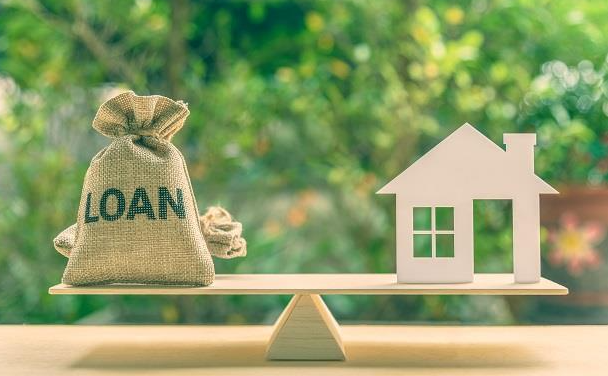
- Borrowing for Basic Fees: Using access bonds or personal loans to cover tuition means the school is fundamentally unaffordable.
- Depleted Emergency Funds: If school fees eliminate your savings, a single medical or vehicle emergency will trigger a financial crisis.
- Missed Asset Payments: Prioritising school fees over your vehicle or bond risks the repossession of your primary assets.
- Income Stagnation: If fees rise by 10% but your salary only grows by 5%, the affordability gap becomes insurmountable within five years, requiring 25% more income just to maintain the status quo.
If you are already drowning, legal mechanisms like debt review can reduce unsecured debt payments by 30–50%, creating the breathing room needed to keep your child in school without losing your home.
Public vs. Private: An Honest Value Comparison
When justifying exorbitant fees, parents often point to the Independent Examinations Board (IEB) matric results. In 2025, the IEB pass rate was over 98%, with a nearly 90% bachelor’s degree pass rate, heavily outperforming the National Senior Certificate (NSC) average.
However, these numbers are misleading, as the IEB cohort is heavily filtered by socio-economic privilege and the ability to pay. The most accurate comparison is between top-tier fee-paying public schools and mid-tier independent schools.
Proprietary Data: The 2026 School Value Matrix
To provide clarity, we have synthesised the total annual costs and academic outcomes across the South African schooling tiers.
| School Tier | Annual Tuition (2026) | True Annual Cost (Inc. Extras) | Academic Value & Reality Check |
|---|---|---|---|
| No-Fee Public | R0 | R3,000 – R6,000 | Outcomes vary enormously, often dramatically below national averages. |
| Top-Tier Public | R30,000 – R60,000 | R45,000 – R85,000 | Excellent value. Matches mid-tier privates in university placements. |
| Budget Private | R20,000 – R45,000 | R30,000 – R60,000 | Smaller classes, variable outcomes. |
| Mid-Tier Private | R45,000 – R85,000 | R60,000 – R110,000 | Good facilities, but R40k+ more expensive than top public schools. |
| Premium Private | R170,000 – R233,000+ | R250,000 – R413,000+ | Elite networks. Roedean and St John’s charge up to R233,000 tuition alone. |
For a detailed breakdown of exact 2026 fees at elite private institutions, consult the Top 10 Private Schools 2025 Matric Results — Official 2026 Fees Guide.
The Case Study of Top Public Schools
The assumption that private is always better is dismantled by government schools like Afrikaanse Hoër Meisieskool Pretoria (Affies). Named the top-performing government school in Gauteng for 2025, Affies recorded 791 distinctions, averaging 3.2 per learner, and achieved a 98% bachelor’s pass rate.
Similarly, public schools like Pretoria Boys High, Westerford, and Wynberg Girls consistently match or beat mid-tier private schools that charge two to three times more. The real educational gap in South Africa is not between public and private, but between no-fee public schools and fee-paying public schools.
Do Low-Fee Independent Schools Actually Work?
For families who cannot access top public schools due to zoning, low-fee independent schools are an attractive alternative. However, rigorous economic research from Stellenbosch University reveals highly nuanced results.
Using advanced econometric techniques to control for selection bias, the researchers found that independent schools generally use financial resources far more efficiently than public schools. However, when looking purely at cognitive outcomes against fees paid:
- In Gauteng: Low-fee independent schools consistently provide parents with significantly better value for money than public schools in the exact same fee bracket.
- In the Western Cape: The opposite is true. Independent schools in the Western Cape do not consistently deliver as good results as public schools charging the same fees.
Parents must also be extremely wary of unregistered “fly-by-night” private schools. Because unregistered schools receive no state subsidies, they survive on tiny budgets, often meaning they must employ completely unqualified teachers on short-term contracts to keep costs down, heavily hindering academic outcomes.
Actionable Solutions: Education Without the Debt
If you find yourself priced out of premium education, you have several powerful, highly effective alternatives to secure your child’s future without resorting to high-interest debt.
1. Leverage High-Yield Feeder Zones
Public schools are bound by provincial admissions systems (like GDE Online) that heavily prioritise geographical feeder zones. Relocating your family to a suburb within the catchment area of a top-performing fee-paying public school is often the smartest financial move you can make. To navigate these strict zoning laws, parents should review the School Feeder Zones & Catchment Areas: Complete Guide.
2. Embrace the Digital-First Schooling Revolution
Online schooling is becoming a mainstream financial rescue mission for middle-class parents. Institutions like Teneo offer full curriculums from roughly R3,000 a month. By stripping away physical infrastructure costs, mandatory blazers, and the petrol costs of the daily school run, families can reclaim up to 20% of their monthly disposable income while accessing over 170 SACE-registered teachers.
3. Aggressively Hunt for Bursaries and Scholarships
Never assume your child will not qualify for financial aid. South Africa has a massive, under-utilised network of bursaries based on academic merit, sports, leadership, and financial need. Most private schools offer internal fee reductions of 20–50% if you confidently approach the bursar.
Key high school bursaries to target in 2025/2026 include:
- SANRAL High School Scholarship: Covers students entering high school (Grade 8 to 12) based on academic merit and financial need. Applications close 30 September 2026.
- MAD Leadership Foundation Scholarship: For Grade 8 learners with strong leadership and basic English proficiency. Closes 26 July 2026.
- Investec High School Bursary: For Grade 10-12 learners excelling in Mathematics, Accounting, or Science. Closes 30 September 2025.
- Allan Gray Orbis Foundation: Targets entrepreneurial Grade 6 learners entering high school. Closes 15 September 2025.
4. Invest the Difference
The long-term mathematical reality of schooling costs is staggering. The R15,000 monthly difference between an elite private school and an excellent public school, if invested at a 10% annual return over a 13-year school career, compounds to approximately R4.3 million. This is more than enough to fund global university degrees and leave your child with a life-changing financial nest egg.
The pursuit of your child’s education should never come at the cost of your family’s financial survival. By understanding the true value of top public schools, exploring digital alternatives, and refusing to borrow for basic tuition, South African parents can navigate 2026 with confidence and fiscal security.








Leave a Reply